GUITAR QUARTET
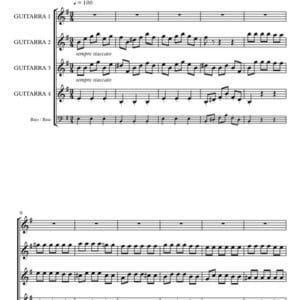
“Sento in seno ch’in pioggia di lagrime” (“I feel within a rain of tears”) from Tieteberga and Il Giustino
In this operatic aria, Vivaldi musically depicts rain as a metaphor for tears. Exterior and internal worlds collide in a pointillistic deluge: the dark skies weep as we are submerged in sorrow.
GUITAR QUARTET
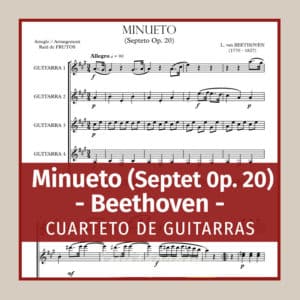
It is the third movement of the Septet Op. 20, and is the most famous time of the whole work.
Beethoven composed this work in 1800, for seven instruments; Violin, viola, cello and double bass (four string); Clarinet, bassoon and trumpet (three wind).
With optional bass. Also valid for guitar orchestra.
GUITAR QUARTET
Right Hand: Index and Middle Rest Stroke. Two and Three-Note Chord.Arpeggios for four fingers.Thumb melody bass.Left hand: Position changes. Natural harmonics.Dynamic Changes.Stacatto.
Bass Guitar, optional.
1,03€Original price was: 1,03€.0,00€Current price is: 0,00€.
GUITAR QUARTET
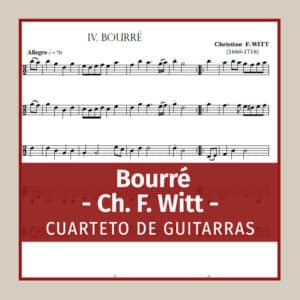
It belongs to the Suite (Witt) : 1.Entrée / 2.Sarabande / 3.Menuet I4.Bourré / 5.Menuet II
See below for related products Right Hand: Index and Middle Rest Stroke.Thumb melody bass. Left hand: Position changes. Slurs.
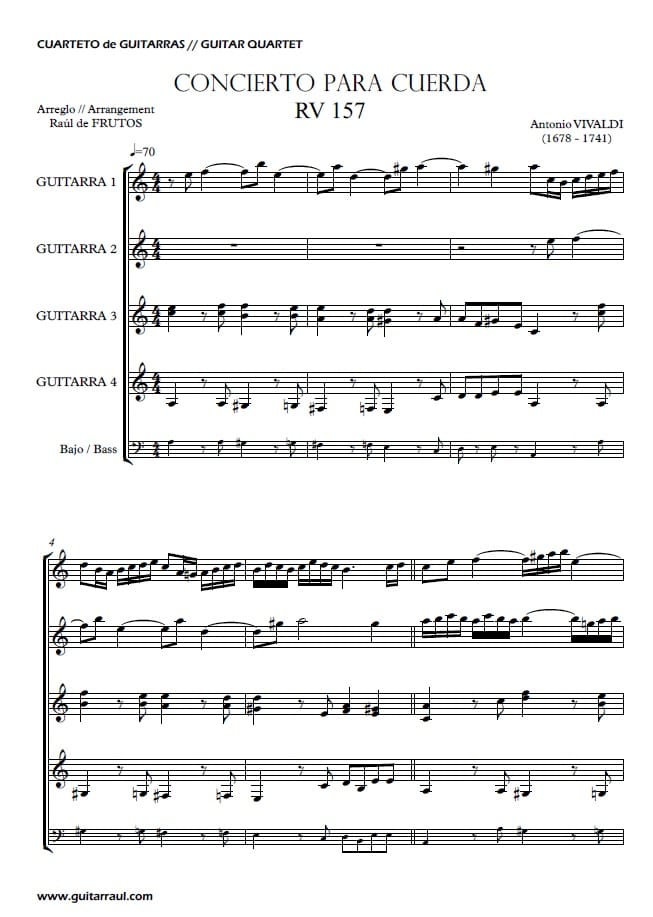
Sheet music for guitar quartet of the first movement (Allegro) of Antonio VIVALDI’s Concerto for Strings RV 157, originally in G minor.Written as a Passacaglia on a descending chromatic ostinato in the bass.
Also valid for guitar orchestra with optional bass.
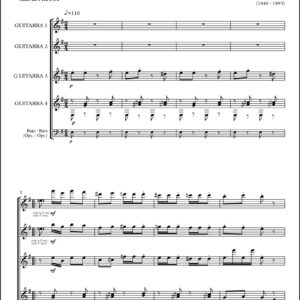
“Dance of the sugar fairy”, belonging to the ballet “The Nutcracker” by Tchaikovsky. Melodic designs, arpeggios, Chords;Position Changes;High Positions, Glissandi. With bass optional. Also valid for the guitar orchestra.
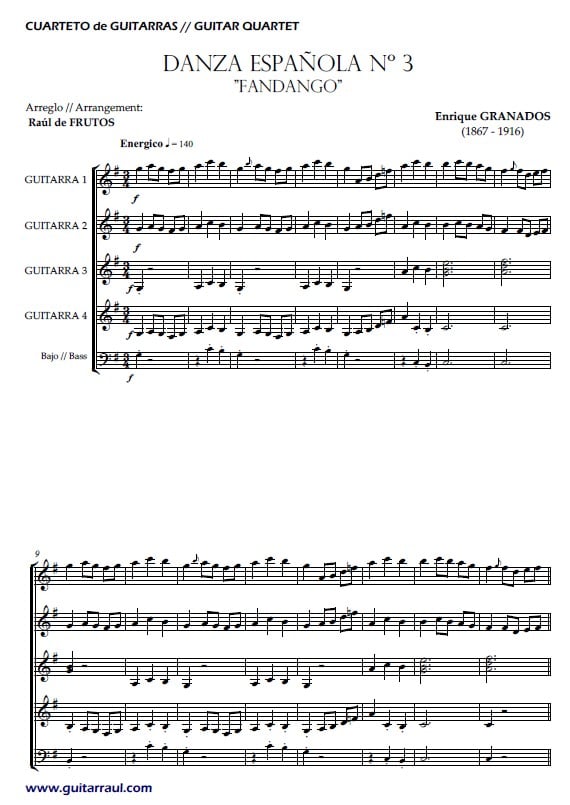
Spanish Dance No. 3, “Fandango,” from the series 12 Spanish Dances, Op. 37, by Enrique Granados. This “energetic” dance possesses great grace and rhythmic flair, with lyrical details that serve as a contrast.
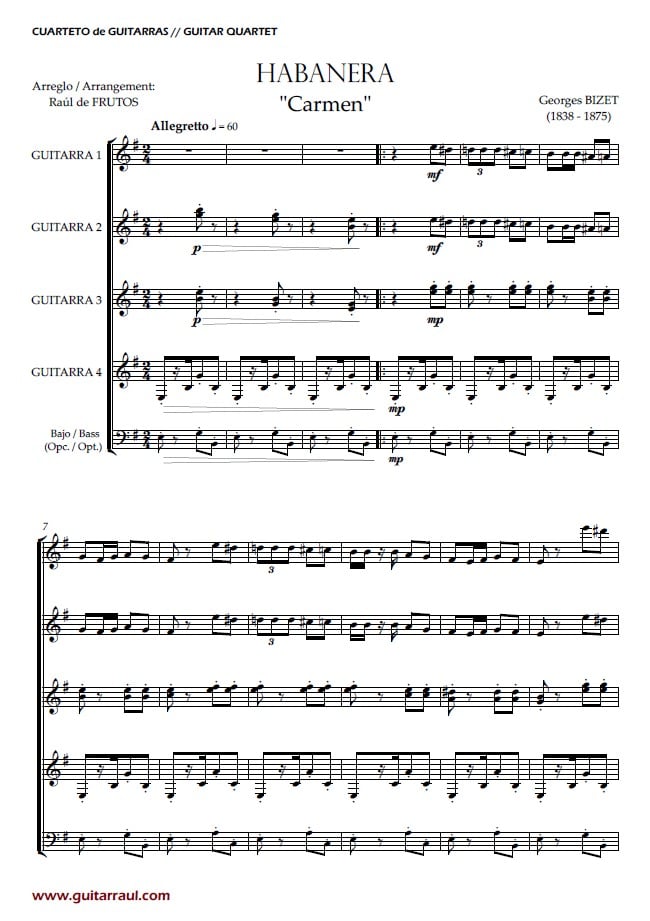
“The Habanera” is an aria from Georges Bizet’s opera “Carmen,” which premiered in 1875. Sung by the title character, Carmen, it is one of the most famous pieces from the opera. The melody is characterized by its catchy rhythm and Spanish flair, reflecting the exoticism and passion of the opera’s setting in Seville, Spain.
With optional bass. Also valid for the guitar orchestra.
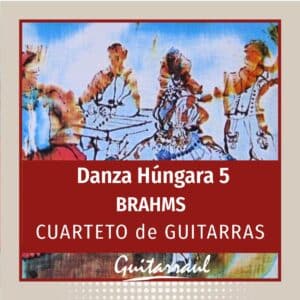
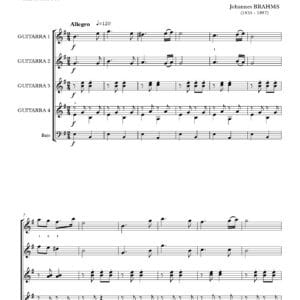
The Hungarian Dances by Johannes Brahms (WoO 1), are a set of 21 lively dance tunes based mostly on Hungarian themes, completed in 1879. Brahms originally wrote the version for piano four hands. Perhaps the best known is the “Hungarian Dance n ° 5”.
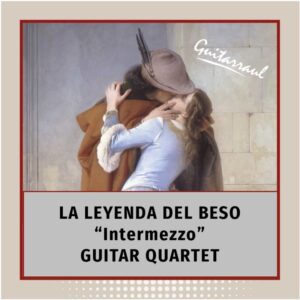
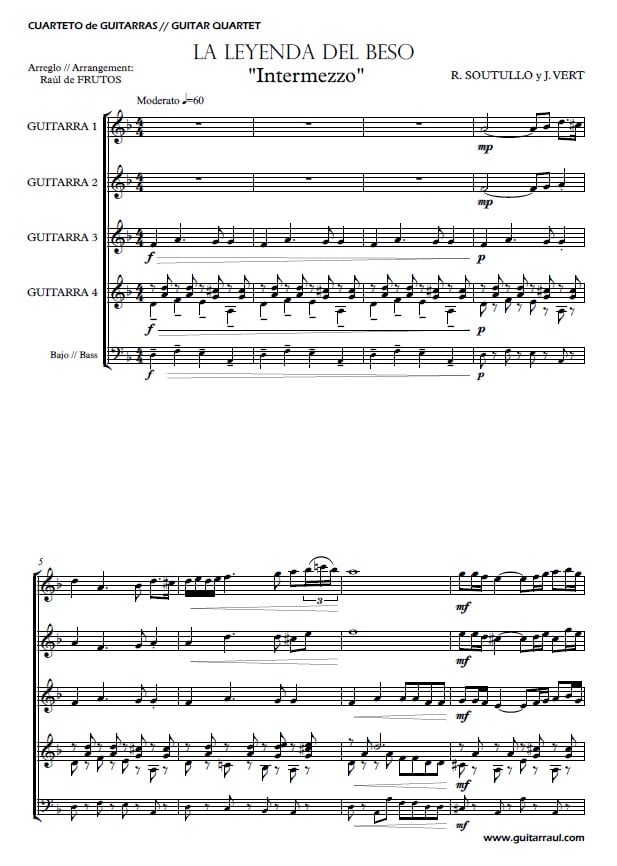
One of the most famous and passionate lyrical excerpts in Spanish music: the celebrated “Intermezzo” from the Spanish zarzuela La Leyenda del Beso (The Legend of the Kiss), composed by maestros Reveriano Soutullo and Juan Vert. This musical adaptation delivers a rich, balanced sound that remains faithful to the expressive power of the original symphonic orchestra piece.
It includes a completely optional Bass part to reinforce the lower register. Perfectly suited for both guitar quartets and guitar orchestras.